Lassen Sie sich von Istar mit unserer Erfahrung und unserem Know-how beim Start Ihres Projekts unterstützen!
Laden Sie Ihre Designdateien und Produktionsanforderungen hoch und wir melden uns innerhalb von 30 Minuten bei Ihnen!
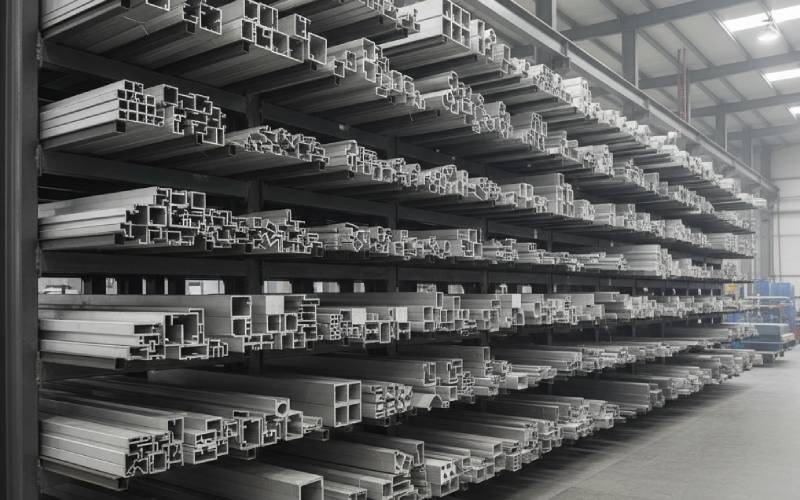
Most projects do not need a grand debate here. If the profile is visible, complex, thin-walled, and lives in the weather, you usually start with 6063. If the same part carries serious load, sees wear, or needs heavy machining, you usually move to 6061. Most real assemblies end up using both.
Most comparison articles summarise it like this: both are heat-treatable Al-Mg-Si alloys used for extrusions, 6063 is the “architectural” one (smooth finish, strong anodizing response, very extrudable), and 6061 is the “structural” one (higher strength, better machinability).
They’ll quote typical T6 numbers. Roughly speaking, 6061-T6 yields around 35 ksi with ultimate strength around 42 ksi; 6063-T6 sits closer to 23 ksi yield and 28–31 ksi ultimate, depending on product form and standard.
That is all correct, but it is static. Real design work is messier. You are not choosing an alloy in isolation; you are trading it against shape complexity, press limitations, surface spec, weld layout, machining time, and what your local suppliers actually stock. The interesting part is how those pieces interact.
If your design is miles away from yield even with 6063, you are not “optimising” by switching to 6061; you are simply moving the bottleneck somewhere else. On the other hand, once your FEA or hand calcs show you are flirting with allowable stress in 6063, 6061 becomes an easy way to buy margin without thickening everything.
The catch is welded zones. In heat-treatable aluminium, the heat-affected zone around a weld drops in strength. For 6061-T6 and 6063-T6, test data shows the as-welded tensile strength can drop roughly from around 45 ksi to about 27 ksi for 6061, and from around 31 ksi to about 19 ksi for 6063.
So yes, 6061 is stronger, but near a weld that advantage shrinks. Sometimes it shrinks to the point where geometry or weld placement matters more than alloy choice. If your structure is weld-dense, design to the weaker HAZ properties first. Then see if changing alloy even moves the needle.
On paper, both alloys extrude. In practice, presses and die designers are friendlier to 6063. It flows more easily, supports thinner walls and finer detail, and keeps the press running with fewer headaches. That is why it became the default choice for window frames, door frames, and other visible extrusions.
If your profile has deep hollows, long tongues in the die, thin fins, or needs tight control of twist and bow, it will usually be:
You can often “port” a mature 6063 profile to 6061, but the press may insist on thicker walls, wider radii, or slower extrusion speeds. That means weight and cost shifts, not just material shifts.
When a designer insists on 6061 for a very intricate shape, a common compromise is to simplify the cross-section, then recover the lost features with secondary machining. At that point, the strength gain is riding on higher part cost and more process steps. Sometimes that trade is fine, sometimes not.
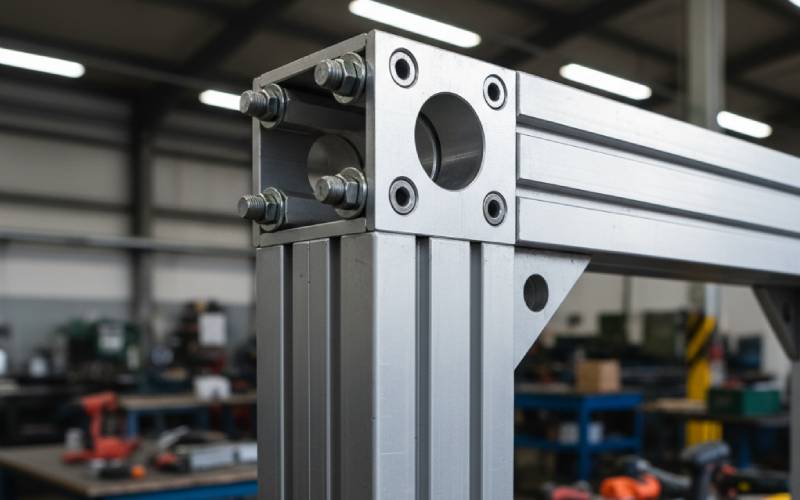
Both alloys resist corrosion reasonably well. 6063 tends to do slightly better in atmospheric exposure because it typically carries less copper than 6061, which means fewer local galvanic cells and a calmer oxide behaviour.
For anodizing and visible surfaces, 6063 is usually the first pick. It accepts anodized finishes more uniformly and gives a smoother as-extruded surface. That is why 6063 profiles dominate architectural facades and trims.
If your part is a structural member hidden inside a machine frame, minor colour variation from anodizing rarely matters. If it is a curtain wall mullion across a commercial building, it suddenly matters a lot. The alloy decision and the finish specification are tied together whether your drawing shows that or not.
A practical rule many teams use: default to 6063 for visible, long-life outdoor extrusions where the stress demand is modest. Pull in 6061 only when stress or wear argues strongly for it, and then work harder on finish control and process consistency.
Both 6061 and 6063 weld with the usual TIG or MIG processes. They are not exotic to join. The nuance is what happens to the alloy temper around those welds.
For 6061-T6, the region next to the weld tends to relax down to something closer to T4 strength, roughly a 40% loss compared to the parent T6 material. 6063-T6 also loses strength in the heat-affected zone, but because the starting strength is lower, the absolute difference in stress capacity can be less dramatic in some geometries.
This leads to a design pattern you see in practice. Long spans, columns, and beams that rely heavily on welded joints often use 6061 for the main members but keep 6063 for smaller, non-critical brackets or covers. If a rail, for example, is classified as a life-safety component, engineers sometimes size the section from the start using HAZ properties instead of base-metal properties to avoid surprises during inspection and repairs.
For bolted joints and machined threads, 6061’s higher hardness is usually helpful. Threads survive more cycles of assembly, tapped holes feel more consistent, and torque scatter is lower. 6063 can work, but you may have to be more conservative with thread engagement or use inserts in high-cycle joints.
If you machine a lot after extrusion, 6061 is usually friendlier. The extra hardness and strength give more predictable chip formation and better tool life, especially in CNC environments. Many shops describe 6063 as slightly “gummier” under aggressive cutting parameters, which is consistent with its lower hardness and strength.
Straightness is also not just a press problem; it is an alloy-plus-shape-plus-process interaction. For the same profile, 6063 can sometimes run straighter at high press speeds because it extrudes more easily and chills in a more uniform way. For thicker, more structural shapes, 6061’s higher stiffness can help during handling, transport, and machining, particularly when long sticks are involved.
Tolerance stack-up across an assembly often drives alloy choice indirectly. If your profile tolerances are relaxed but your machined datums are tight, a common approach is 6063 extrusion with 6061 blocks or plates bolted on where precision is needed. Trying to make a very tight-tolerance, fully machined frame solely from 6063 is possible, just slightly against the grain of typical practice.
Raw material price per kilogram between 6061 and 6063 is often small compared with tooling, machining, and finishing costs. In many regions, 6063 extrusions are easier to source in odd shapes and small lots, simply because it is the most common extrusion alloy. 6061 is more common in plate, bar, and structural shapes.
Extruders tend to prefer 6063 for complex architectural profiles; they can run the press faster, scrap less, and claim better surface quality. When you insist on 6061 for the same geometry, they may quote higher minimum order quantities, slower lead times, or tighter process windows. The quote is telling you what the alloy decision did to their risk.
So alloy choice is also a conversation with your supply chain. If you know you will move volume through a particular profile for years, negotiating early trials in both alloys, at real press speeds, can repay the effort.
The table below is not a property list; you already know where to find those. It is a decision aid for typical extrusion projects where the contest really is “6061 vs 6063” rather than some other alloy entirely.
| Design situation or question | Bias toward 6061 | Bias toward 6063 | How this often plays out in practice |
|---|---|---|---|
| The profile is slender but carries significant load or has tight deflection limits | Higher yield strength and stiffness help you stay inside stress and deflection limits with modest section growth | Lower strength makes it harder to pass load cases without thicker walls | Long spans, machine frames, and heavy racks often switch to 6061 once 6063 sections become too bulky |
| The section is complex, thin-walled, with deep hollows and visible surfaces | Possible, but often needs thicker walls, larger radii, slower press speed | Very extrudable, smoother surface, stable anodizing response | Most window, door, and facade systems standardise on 6063 and optimise the die and finish around it |
| Welds are numerous and sit in high-stress regions | Base material is stronger, but HAZ strength loss is significant; design must respect lower welded values | Also loses strength when welded, but base strength is lower to begin with | Choice of weld location, weld size, and temper recovery can matter more than switching alloys |
| Parts need heavy machining, many tapped holes, or precise interfaces | Machines well, better tool life, more durable threads | Slightly softer and “gummier” feel during cutting, more care needed for threads | Common pattern: 6063 for the basic extrusion, 6061 blocks or inserts where threads and tight tolerances are concentrated |
| The part is always visible and finish consistency is part of the specification | Usable, but takes more process control to match colour and surface on large projects | Strong anodizing performance and smooth as-extruded finish | Architectural systems, retail fixtures, and interior trims almost always default to 6063 unless strength clearly requires 6061 |
| Local supplier stocks mostly structural shapes and plate, limited custom extrusion capacity | Readily available in plate, bar, and standard structural profiles | May require special runs or limited profile catalog | For one-off or low-volume fixtures, 6061 stock shapes plus machining can beat custom extruding a 6063 profile |
| You expect future design changes and frequent small-batch prototypes | Easy to machine from plate or bar, simple to modify | Best when you commit to a die and run volume | Early prototypes in 6061 from plate, later phase moves to a tuned 6063 extrusion once geometry stabilises |
This table is deliberately biased toward how projects actually behave over time rather than just static property charts.
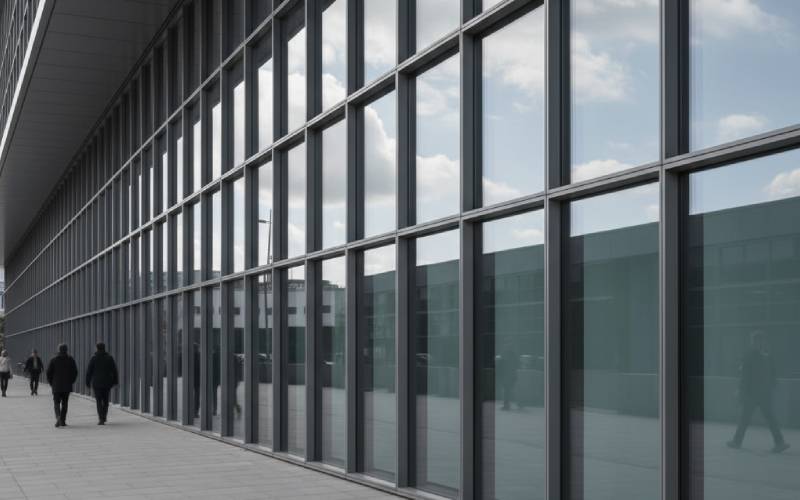
Imagine a rectangular hollow profile intended for balcony railings. It spans a few metres, must meet a safety factor on line load, and is fully exposed to weather. The rails are welded to posts.
First pass, you run the numbers in 6063-T6, because railing extrusions and anodized finishes are already common in that alloy. Stress checks are close to allowable, but acceptable. Then you notice that the code or internal standard requires you to check strength in the welded zone, not just the base material. HAZ properties cut into your margin.
You have three basic moves.
You can thicken the wall, accepting a heavier section and more visible bulk. You can move some welds so the highest moments sit away from them, which may complicate fabrication. Or you can move to 6061, gain strength, and keep the section size but accept more care in finish matching and possibly a slightly tougher extrusion process.
Most railing companies in this situation keep 6063. They tune wall thickness, corner radii, and weld placement first, because 6063’s extrusion behaviour and surface properties are already proven for this type of product. When the architecture is very weight-sensitive or spans grow longer, the conversation about switching to 6061 becomes real. But it usually comes after geometry and weld layout are exhausted, not before.
Now consider a machine frame for industrial equipment. The profiles are mostly hidden behind panels, bolted together with gussets and plates, and the frame must hold positional accuracy over time.
Here, geometry is simpler and surface appearance has low priority. The frame will be drilled, tapped, faced, and occasionally reworked during its life. You gain more from machinability and stiffness than from anodized perfection.
Design teams in this space often start with 6061 for the primary members and plates, using standard extrusions or machined bar. If there are any visible trims or cable channels, those might be 6063 profiles that snap onto the main frame. Swapping the entire system to 6063 would rarely save enough to offset the machining and stiffness penalties.
It is sometimes useful to hold a few rounded numbers in mind, not as design allowables but as a sense of scale. For common tempered forms you will see something like this across standards and data sheets:
6061-T6: yield strength on the order of 35 ksi, ultimate strength roughly 42 ksi, Brinell hardness around the mid-90s.
6063-T6: yield strength closer to the low-20s ksi, ultimate around 28–31 ksi, Brinell hardness generally in the low-70s.
Both share the same basic modulus. Deflection will not change drastically between them for the same section, but allowable stress will. That difference – how close your design lives to yield or fatigue limits – is often the most honest driver behind changing alloys.
If you strip away catalog language and marketing, the pattern is simple.
Use 6063 when you care most about extrusion behaviour, thin walls, smooth surfaces, and long-term finish stability, and your load cases are modest.
Use 6061 when the section is relatively simple, machining is important, loads are high, or your design is governed by the welded or bolted strength of structural members.
Then, in any project of real size, expect to mix both. Alloy choice is not a once-per-project decision; it is a local decision for each functional group of parts, made in context with the press, the weld shop, the finish line, and the people who will be maintaining the equipment ten years from now.