Let Istar help you get started on your project with our experience and know-how!
Upload your design files and production requirements and we will get back to you within 30 minutes!
If you weld it, 7005 usually makes sense. If you machine it, load it hard, and never weld it, 7075 usually wins. Most of the real decisions are just variations on that one line.
Both 7075 and 7005 sit in the same 7xxx family: aluminum–zinc alloys aimed at high specific strength. Chemically they are very close, with roughly 96% of their average composition in common. But they were aimed at different worlds.
7075 grew up in aerospace, where you machine parts from plate or bar and trust fasteners more than weld beads. It offers very high tensile and yield strength plus solid fatigue resistance, at the cost of tricky welding and some sensitivity to stress-corrosion cracking in aggressive environments.
7005 was shaped around welded lightweight structures. It accepts MIG/TIG joints, regains strength through natural or mild artificial aging, and reaches “high enough” strength for many frames, trusses and enclosures, without needing full solution heat treatment after welding.
So on paper they look like cousins. In a workshop they behave like different species.
For context, here are typical values engineers use for design-level thinking (representative T6/T651 data, room temperature):
Typical published data for 7075-T6 show ultimate tensile strength around 560–570 MPa, yield around 480–500 MPa and fatigue strength near 160 MPa, at a density of about 2.81 g/cm³. 7005 data cluster around 350 MPa ultimate tensile strength, 150 MPa fatigue strength and density about 2.78 g/cm³.
Those numbers are not exact design allowables; they are the right ballpark.
| Property / aspect | 7075 (typical T6 / T651) | 7005 (typical T6) | Practical takeaway |
|---|---|---|---|
| Density | ~2.81 g/cm³ | ~2.78 g/cm³ | Weight difference between the two is negligible; geometry dominates. |
| Ultimate tensile strength | ~560–570 MPa | ~350 MPa | 7075 carries substantially higher peak static load if joints are not the weak link. |
| Yield strength | ~480–500 MPa | ~280–310 MPa | For stiffness-driven parts or bolted joints, 7075 lets you shrink sections more aggressively. |
| Fatigue strength (unwelded) | ~160 MPa | ~150 MPa | On plain specimens they are closer than most people assume; welds change the story. |
| Weldability (fusion welding) | Poor, crack-sensitive | Good for a 7xxx alloy | 7075 is usually avoided for conventional welded structures; 7005 is used exactly there. |
| Heat treatment after welding | Typically needed and specialized, if attempted at all | Natural or modest artificial aging restores much of the strength | 7005 lets small shops weld frames without owning a full solution heat-treat line. |
| Forming / extrusion difficulty | Harder to form; higher alloy content | Still tough, but somewhat more forgiving than 7075 | Complex thin sections are challenging for both; tooling and vendor experience matter. |
| Corrosion / SCC behaviour | Good general corrosion resistance but more prone to stress-corrosion cracking | Good corrosion resistance; can outperform 7075 in some outdoor welded uses | Surface prep and coatings can matter more than the small alloy difference. |
| Typical use | Aerospace, defense, high-load machined parts, performance hardware | Bicycle frames, welded trusses, transportation structures, sports equipment | The alloy choice often follows the joining method before anything else. |
| Relative cost | Higher | Lower than 7075, usually higher than 6061 | 7075’s “aerospace” role and alloy content keep its price up. |
If you need a one-line summary of that table: 7075 is the stronger but fussy option, 7005 is the weld-friendly structural one that aims for “strong enough plus manufacturable”.
On datasheets, the big headline is strength. In practice, the big split is weldability.
7075 is famously reluctant to be welded by conventional fusion processes. High zinc and copper contents give you coarse, brittle microstructures and a heat-affected zone that can lose strength sharply and crack under load or during cooling. Most hand-welded 7075 joints are either experimental, highly specialized, or avoided entirely.
7005 sits almost alone inside the 7xxx family as “actually weldable.” Welding specialists list 7005 and 7039 as the two 7xxx alloys they treat as weldable in routine work. After welding, 7005 can be air-cooled and allowed to age at room temperature over a few weeks, recovering roughly 70–90% of its pre-weld strength, or artificially aged with mild oven cycles (for example, 200°F then 320°F in common frame-builder practice).
That property is the quiet reason 7005 shows up in so many bicycle frames, small welded structures, and custom one-off projects. You do not need a large solution heat-treat furnace, quench tanks and a controlled aging cycle for every frame that leaves the jig.
So before talking about fine-grained differences in fatigue curves or corrosion tests, most engineers silently ask a simpler question: “Is someone going to strike an arc near this part?”
If the answer is yes, 7075 usually exits the conversation.
Both alloys are Al–Zn–Mg systems. The nuance is in how far each one leans into high alloy content.
7075 tends to run 5.6–6.1% Zn, around 2–3% Mg, and around 1–2% Cu, with traces of other elements. This mix supports very high strength after solution treatment and aging, but also pushes the microstructure toward phases that are less forgiving under welding and can be more prone to stress-corrosion cracking if you pick the wrong temper for the environment.
7005 also carries notable zinc (4–5%) and magnesium (around 1–1.8%), but keeps copper essentially out of the picture and uses chromium and zirconium as control elements for grain refinement and weld-zone stability. This is part of why 7005 can be welded and then allowed to regain strength through natural or mild artificial aging without catastrophic loss of toughness.
From a design point of view, you do not usually tune around those details directly. Instead you see their fingerprints on weldability, temper options and long-term cracking behaviour, and you pick based on those.
On plain, unwelded specimens, both alloys sit in a similar fatigue-strength band: roughly 150–160 MPa endurance limit for high-cycle loading in common T6 tempers. That surprises many people who only look at static tensile strength.
Where life diverges is at the joints.
Unwelded 7075 parts, especially in T6 or similar high-strength tempers, show very strong fatigue performance for their weight, which is why they are used on heavily cycled aerospace fittings, vehicle suspension pieces, firearm receivers, and other hardware carrying repeated load reversals.
Once you introduce a conventional fusion weld into 7075, the local microstructure and residual stresses can knock fatigue strength down so far that the joint becomes the life-limiting feature regardless of how strong the parent material looks on paper. This is the main reason design guides for welded aluminum structures almost always steer you toward 5xxx or 6xxx alloys instead.
In 7005, welded joints are still the weak point, but not disastrously so. Natural or artificial aging brings the heat-affected zone back toward a useful T6-like condition without needing a full solution heat treatment. For bicycle frames and similar trusses that see millions of moderate amplitude cycles, 7005’s combination of weldability and fatigue behaviour has proven adequate in practice, provided the design does not flirt with the edge of the S–N curve.
So the pattern is simple: if your most critical locations are weld toes, 7005 is at least workable. 7075, not really. If your most critical locations are bores, threads and fillets in machined blocks, 7075 is the one that keeps you out of the yielding regime.
In neutral environments with sensible coatings, both alloys behave reasonably well.
7075 can be more susceptible to stress-corrosion cracking, which is why overaged tempers like T73/T7351 exist: they soften the alloy slightly to gain better resistance. In dry climates and with good design for drainage and sealing, the issue rarely dominates, but aggressive marine or chloride-rich environments can expose it.
7005 shows good corrosion resistance, and several sources note that under some outdoor welded conditions, it can hold up better than 7075, particularly when welds are left as-is with only basic surface protection.
In many real products this turns into a coating and detailing question before it becomes an alloy question. Drain holes, sealants, conversion coatings and paint too often matter more than the subtle difference between 7005 and 7075.
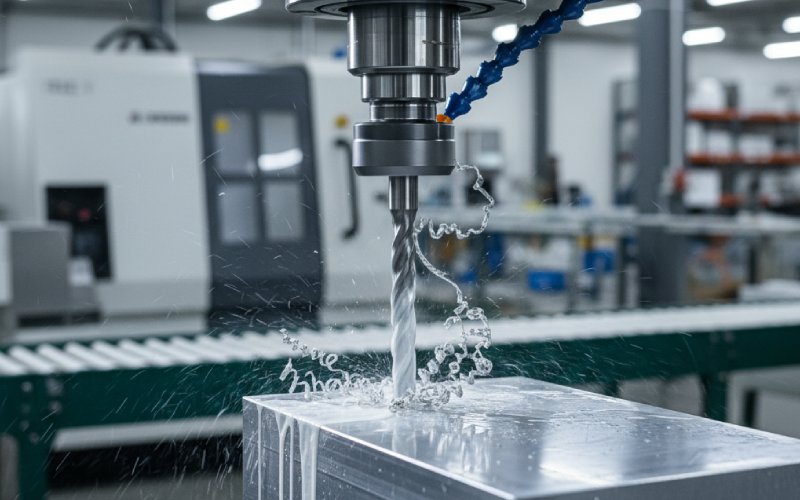
When people say “strong aluminum,” they usually mean something in the 7075 family. Aerospace fittings, wing and fuselage brackets, landing-gear components, high-load housings, precision jigs, firearm receivers, high-end sports hardware and some mold tooling are common uses.
These are overwhelmingly machined or forged parts, attached by bolts, rivets or interference fits, not by conventional welding. The design logic is straightforward: if you never weld it and the part is strength-limited, 7075 buys you margin or lets you shrink sections.
It also appears in cycling and outdoor equipment, but mostly as smaller machined pieces: chainrings, derailleur cages, stems, some hubs, various clamping parts. These are stressed parts, but usually not welded ones.
7005 has carved out a role in welded structural components where the designer wants more strength than 6xxx alloys, but does not want the cost and process complexity of full solution treatment after every weld. Bicycle frames, welded vehicle structures, trusses, heat-exchanger frames and sports gear such as bats and rackets are typical.
Frame builders and small fabrication shops like it because standard welding gear plus a powder-coat oven, or even just time for natural aging, can get them to a usable temper. That is not feasible with most of the rest of the 7xxx family without more serious equipment.
In short: 7005 appears wherever “welded, light and strong” all have to be true, but extreme peak strength is not the only thing on the scorecard.
Cost swings with market conditions, but the relative pattern is stable: 7075 is more expensive per kilogram than 7005 for comparable product forms.
That premium comes from alloy content, processing and its status as a go-to aerospace alloy. 7005 is still a specialized material compared with 6061, but it targets a more cost-sensitive segment: welded commercial frames and structures that need high strength but are not flying.
From an extruder’s point of view, both alloys are harder to push and handle than 6xxx series, with more demanding die design and process control, so you also see minimum-order quantities and lead times helping drive the final decision.
Most teams do not start with a blank datasheet comparison. They start with a project constraint and work backwards. A few common patterns:
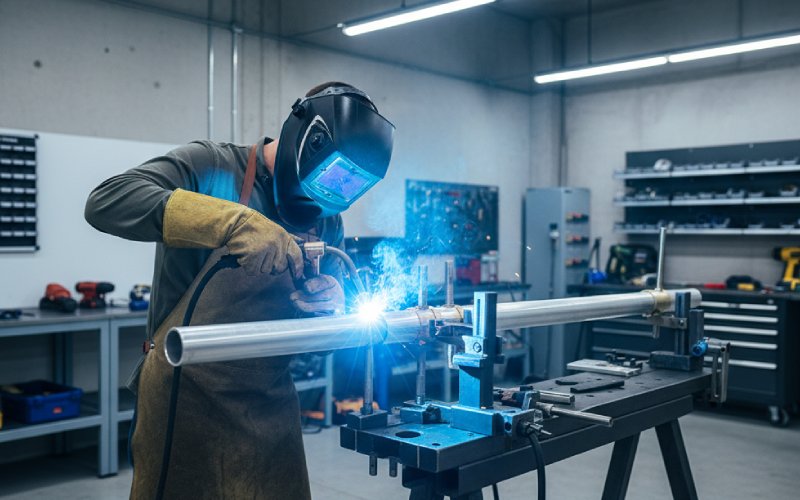
If the main structure is welded, and you do not have full solution heat-treat capability, 7005 is the sensible 7xxx candidate. It lets you weld, air-cool and then rely on natural or modest artificial aging to recover strength, and this process is already familiar in frame-building and small-structure communities.
If the main structure is machined or forged and joined by fasteners, and stress analysis shows you are strength-limited rather than stiffness-limited, 7075 is usually the first 7xxx considered. It offers significantly higher yield and ultimate strength, and the fatigue behaviour of unwelded parts is well characterized in aerospace literature.
If geometry or buckling dominates (thin panels, large tubes), the modest density difference between the two alloys disappears into noise, and you often end up choosing based on joining, vendor capability and cost instead of chasing the last few MPa of strength.
If the environment is aggressive (salt, high humidity, sustained tensile stress), you start looking harder at temper selection and protection systems. You might accept a slightly lower-strength overaged 7075 temper for better stress-corrosion behaviour, or lean toward 7005 for a welded structure with robust coating.
None of these rules are absolute. They are just the shortcuts people actually use around a design review table.
Seen from a distance, both alloys are high-strength Al–Zn systems with similar density and broadly similar fatigue limits on clean, unwelded specimens. Up close, they separate along one very practical axis: 7075 concentrates on raw strength for machined and bolted hardware; 7005 concentrates on being strong enough while remaining weldable and relatively easy to process after welding.
So the quickest way to avoid overthinking the choice is simple. Decide whether that critical section in your design lives near a weld bead or inside a machined block. Then let the alloy follow that decision.