Let Istar help you get started on your project with our experience and know-how!
Upload your design files and production requirements and we will get back to you within 30 minutes!
Let’s skip the theory and talk about what strict tolerances actually do to the price of a CNC part — on the shop floor, in the quote, and in your supply chain.
Most machine shops treat something around ±0.005″ (≈0.13 mm) as “standard production” and ±0.001″ (≈0.025 mm) as “precision”. Go tighter than that and you’re in specialty territory.
And the cost does not increase in a straight line:
That’s not a scare tactic. It’s how the process behaves once the machine, tooling, temperature, inspection, and scrap risk all have to be controlled together. DFM studies show this cost curve is strongly non-linear: once you cross certain tolerance thresholds, machining time and control effort dominate everything else.
So when you put strict tolerances all over a drawing, you’re not sprinkling quality. You’re dialing in a global cost multiplier.
Use this as a mental model, not a quote sheet.
| Tolerance band (inch / mm) | Typical label on shop floor | Common process mix* | Approx. cost vs standard | Typical inspection level | Typical use case |
|---|---|---|---|---|---|
| ±0.005″ (±0.13 mm) | Standard CNC machining | Single setup, standard tools, standard feeds | 1.0× (baseline) | Calipers, micrometers, sample checks | General brackets, covers, non-critical fits |
| ±0.002″ (±0.05 mm) | Precision | Optimized programs, more passes, better fixt. | ~1.5–2.0× | More points per part, gauges, records | Basic bearing seats, sliding fits, key holes |
| ±0.001″ (±0.025 mm) | Tight tolerance | Slower feeds, finishing passes, maybe grinding | ~3–4× | CMM on critical features, full reports | Sealing surfaces, precision alignment features |
| ±0.0005″ and below | Very tight / ultra-precision | Climate control, special machines, grinding | ~5–10×+ (up to 24×) | 100% CMM, dedicated gages, full docs | High-end optics, aerospace, critical assemblies |
*Process mix varies by shop, material, and volume. Values above reflect patterns reported by CNC suppliers and DFM articles, not a fixed rulebook.
The important bit: there’s a step change in cost every time you cross a band, even if the drawing only moved by 0.001″.
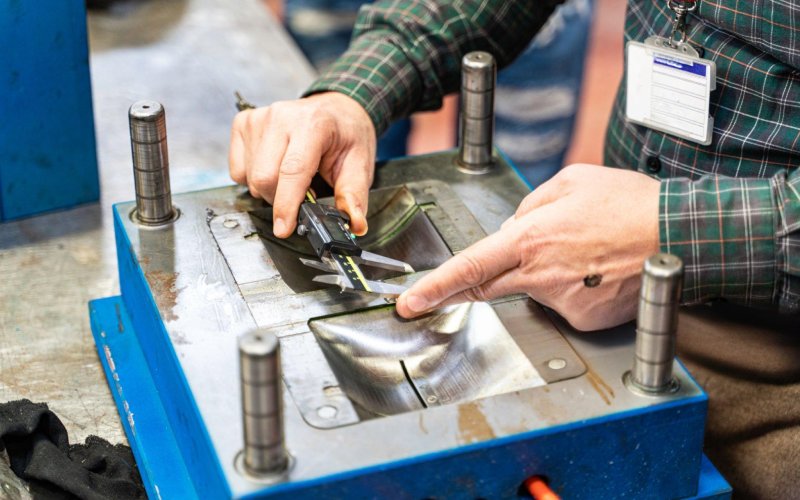
You see “+30%” on a quote. The shop sees this instead:
Doubling cycle time on a vertical mill is not hard; just tighten a few key tolerances and surface finish notes at once. Multiple sources point out that stricter tolerances force slower machining and more passes, which is a direct hit on machine-hour cost.
Standard tolerance: milling and turning, maybe deburr.
Stricter bands: now you’re looking at grinding, lapping, honing, or wire EDM for some features. Tight tolerances often require these secondary operations to hit size and finish consistently.
Each extra process adds:
None of that is free.
Loose-ish part? Basic vise, decent parallels, job runs.
Strict tolerance stack between several faces? Now you see:
Every new fixture and every extra setup is setup hours, not minutes. Those hours are spread across the batch, but they’re in the price.
Holding ±0.001″ on a bore all day doesn’t happen with whatever drill happened to be in the carousel.
Shops respond with:
Those costs are small per part individually. Together, they justify that “tight tolerance uplift” you see in the quote.
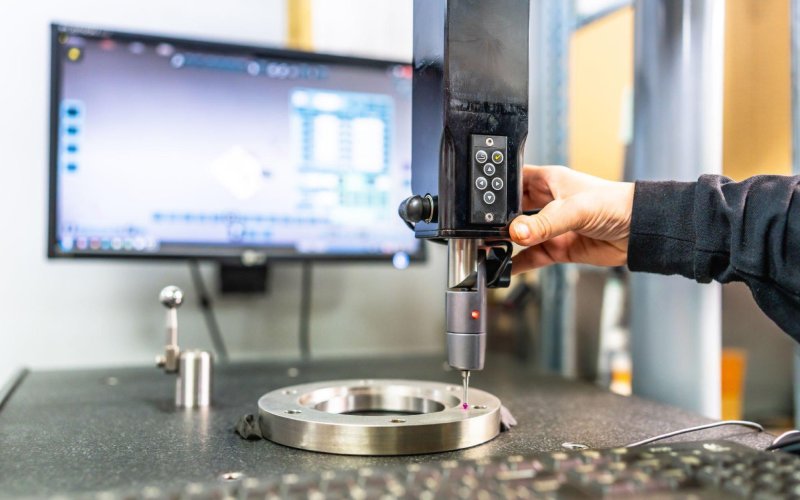
Inspection is tightly tied to tolerances, not just to your quality manual.
Standard bands:
Strict bands:
Inspection time can easily move from 5–10% of part cost to 15–25% for tight tolerance work.
When your drawing gives the shop almost no room, they respond with:
You’re not just buying the parts that ship. You’re also paying, indirectly, for the ones that did not.
Price impact isn’t only technical. There’s a sourcing side to it.
Many general-purpose shops are comfortable with ±0.005″ across the print, ±0.001″ on a few features.
Once the drawing is dense with strict tolerances:
Fewer bidders typically means less price pressure.
The shops that do quote strict tolerance work:
Their hourly rate tends to be higher. It has to be. When your drawing pulls you into that supplier tier, price follows.
Over-tolerancing quietly shifts risk from your engineering team to the shop:
They do it with price.
You don’t need a big workshop for this. Just a print, a pen, and 10 minutes.
Take the drawing and highlight:
Everything else gets no highlight — for now.
On the highlighted features:
Most CNC tolerance guides recommend defaulting to general ISO-style tolerances (e.g. ISO 2768) for non-critical dimensions for exactly this reason.
Surface finish, flatness, and cosmetic details interact with tolerances:
Don’t let a cosmetic note drag a whole face into ultra-tight territory unless the product truly needs it.
Sometimes it’s cheaper overall to tolerate more variation and fix the rare outliers in assembly, instead of forcing every single part to hit an aggressive band.
Send a copy (PDF or STEP + drawing) and explicitly ask:
“Mark any dimension where you could loosen tolerance and drop price without risking function.”
You’ll usually get back:
That exchange is often where the big savings appear.
There are cases where you really should spend extra on tight control, because not doing so costs more later.
If a loose location on a critical hole stack forces technicians to hand-fit or shim every assembly:
In that situation, tightening a few key positional tolerances may increase part cost but drop assembly cost overall.
On gasket grooves, O-ring seats, and valve components, small deviations can create leak paths. Many manufacturers report that ±0.01 mm-class tolerances on these features prevent expensive field issues and rework.
Here, strict tolerance is cheap insurance compared with field failures.
Medical, aerospace, defence, some automotive — these sectors often mandate tighter tolerances and verification, not because “better is nicer”, but because:
If you’re in that world, strict tolerances are just part of the cost structure. The trick is to limit them to the small subset of features that truly fall under those rules.
Use these as quick checks during design review.
And one more: whenever you see ±0.01 mm (or tighter) all over a print, think “this is probably not the cheapest version of this part.”
In everyday CNC production, anything around ±0.005″ (±0.13 mm) is common. When you start asking for ±0.002″ (±0.05 mm) or tighter across important features, most shops treat that as strict. Bands near ±0.001″ (±0.025 mm) or below are clearly tight, and below ±0.0005″ you’re into ultra-precision work.
Because they change several things at once:
More complex setups and fixturing
Slower cuts and more passes
Extra finishing operations
More intensive inspection
Higher scrap and re-run risk
All of those flow into the hourly rate and the quoted part price.
Usually no. Most CNC tolerance guides and DFM resources recommend applying tight tolerances only on features that control assembly, sealing, or motion, and using standard bands elsewhere.
It’s common to see that 10–20% of dimensions actually drive function, while the rest can stay relatively relaxed.
Yes — in fact, that’s helpful. A typical pattern:
Set a general tolerance block (for example, “unless otherwise specified: ±0.1 mm”)
Call out stricter tolerances only where they matter
Keep GD&T consistent with a clear datum structure
What you want to avoid is inconsistent notes or conflicting tolerance blocks.
Broadly speaking:
One or two tight features: maybe ~10–30% uplift
Many tight features across the part: often 2–4× vs. a drawing that uses standard bands for non-critical dimensions
Ultra-tight tolerances (metrology-grade work): can go to 10–24×, especially with special materials and inspection.
Actual numbers depend on geometry, material, and volume.
Yes. Hard-to-machine materials (stainless steels, nickel alloys, some plastics) and unstable materials (that move with stress or temperature) make strict tolerances harder to hold. That means slower machining, more trial cuts, more scrap, and higher cost relative to the same tolerances on a friendly alloy like 6061-T6.
Often it’s the opposite. Starting with moderate tolerances:
Reduces prototype cost and lead time
Lets you see where real problems appear in test or assembly
Helps you tighten only the dimensions that actually matter
Several CNC suppliers report that over-tolerancing is a common source of unnecessary prototype cost.
Send your drawing and ask very specific questions, for example:
“Which three dimensions on this part are most expensive for you to hold?”
“Where could we open tolerances without risking assembly issues?”
“Does any feature force a second setup or special tooling?”
Their answers tell you where your cost is hiding — and where relaxing strict tolerances will give you the biggest price drop.
If you treat tolerances as a business lever, not just a drawing detail, you get two things at once: CNC parts that work the way you need, and quotes that don’t spike for reasons that only live in the title block.